
The art of manifestation is not a parlour trick.
“Andreas, in all my years of wandering, I’ve learnt one essential truth: we are the creators of our own reality.”
(Il ponte vermiglio, Chapter 6)
Contrary to what many popular accounts suggest — often oversimplified for mass appeal — manifestation isn’t about closing your eyes, picturing a villa by the sea, and waiting for the universe to hand you the keys.
Authentic creation doesn’t arise from a whim of the mind, but from a state of consciousness.
According to neuroscience, the mind holds genuine transformative power. In his book Self Comes to Mind (2010), Portuguese neurologist and psychologist Antonio Damasio explains that our sense of self emerges from the integration of body, thought, and emotion. Feelings, therefore, are not peripheral but fundamental to the construction of subjective reality. “Manifesting” is not about wanting more intensely, but about being more present to oneself — aligning thought, emotion, and body into a single language.
Certain spiritual teachings echo this view. In The Seth Material, the seminal work of author and channel Jane Roberts, it is suggested that each of us creates our own reality. Yet this creative power is not about declaring something and then waiting passively for it to appear.
The real question becomes: which part of me is creating this reality?
If it’s the ego, it will create through its illusion of control.
If it’s an unhealed wound, it will attract what keeps the wound alive.
But if it’s the most authentic, aligned part of us — what we might call the Essence or Higher Self — then what manifests will be a coherent extension of our inner state.
This perspective finds resonance in neurobiology too. In The Mindful Brain (2007), Daniel Siegel describes the mind as a “flow of energy and information” that can be shaped through conscious attention. In other words, we have the capacity to be active co-creators of our neural landscape. Similarly, neuroscientist Anil Seth, in Being You (2021), explains that what we perceive as “reality” is largely a predictive construction of the brain, continuously updated by internal models. The world, then, is not simply observed — it’s actively built from the inside out.
This reinforces a profound idea: our subjective experience is a cornerstone in the creation of the reality we live.
Life is not a shortcut to fulfilment. It’s an alchemical journey that embraces both light and shadow, ecstasy and confusion, creation and dissolution. Every fall is not a punishment — it’s a portal. Michael Merzenich, one of the pioneers of neuroplasticity, demonstrated that the brain continues to reshape itself in response to experience throughout life (Soft-Wired, 2013). This means that even the most painful moments, when lived consciously, can transform us.
Every doubt is not a mistake, but a call towards a deeper truth.
To express oneself is to become whole — not merely to obtain what we desire, but to recognise who we’ve become along the way. Difficulties, inconsistencies, even apparent failures are not detours, but essential parts of the process. They help us clarify, question desires that no longer belong to us, and discern what we truly want from what we once thought we did. Through these moments, we begin to see with greater clarity who we are and where we wish to go.
Yes, at times it will be painful. You’ll cross deserts, weather storms, and face silences that scream. But that’s where real power is born — not the power to control, but the power to be in harmony with all things.
Richard Davidson, professor of affective neuroscience, has shown that systematic mental practice — such as meditation — can alter brain circuits associated with resilience, calm, and empathy. This means that inner coherence isn’t merely a spiritual metaphor; it’s a biological fact.
Eric Kandel, Nobel laureate in Medicine, demonstrated that experience can modify gene expression in neurons, showing that even identity itself is a neurobiologically adaptable process (In Search of Memory, 2006).
In summary, neuroscience shows that the mind is a dynamic system — capable of reshaping itself in response not only to external stimuli, but also to conscious intention. Through neuroplastic processes, the brain reorganises its connections, enabling new perceptual, emotional, and behavioural patterns to emerge.
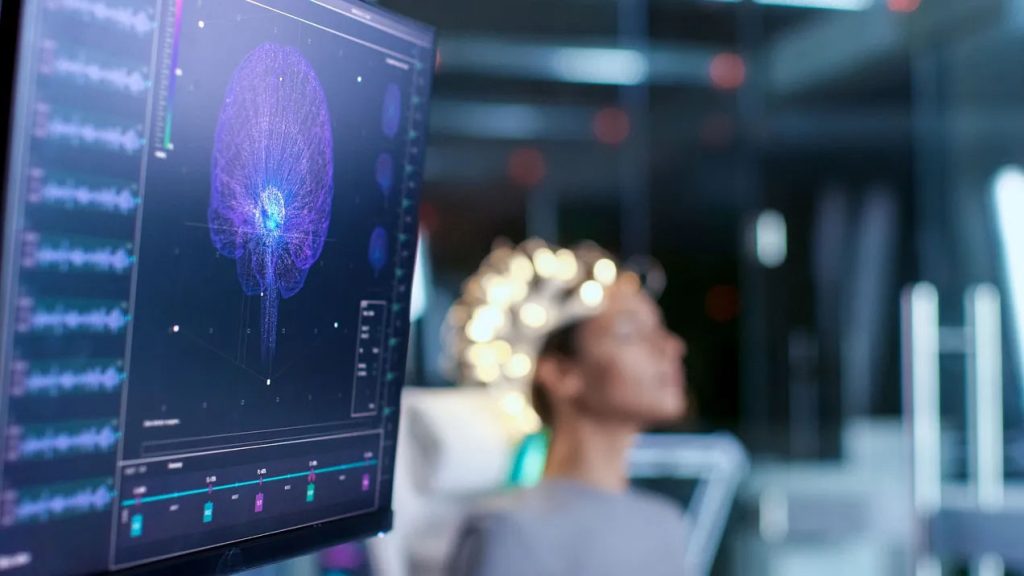
Studies by Merzenich and Davidson confirm that through intentional mental practices — such as meditation, self-observation, and mindful visualisation — we can strengthen neural networks that support states of calm, clarity, and resilience.
In this light, we don’t express the suffering we’ve endured, but rather the quality of the frequency we’re cultivating now. When we begin to align with our most authentic essence, reality no longer responds to our wounds, but to our truth. We don’t manifest what we merely imagine, but what we have become capable of sustaining — with integrity, presence, and inner coherence.
And then, yes — creation happens.
Dreams take form.
Not as magic, nor as wishful thinking, but because we’ve learnt to contain them, integrate them, embody them.
Because, at last, we live them — from within.
Vr.
If you’d like to learn more about my novel Il ponte vermiglio, click here.
The English edition of Il ponte vermiglio will be released by the end of 2026.